How it is told
Why could Ravana not carry the Baidyanath lingam to Lanka?
Nine heads into the fire
Ravana wanted Shiva himself in Lanka, not an image of him. He sat at Kailash and cut off his heads one at a time and put them into the fire, and at the ninth — the tenth in some tellings, with the last one raised and the knife already moving — Shiva stopped him and asked what he wanted.
The atma-linga, and the rule attached
What he was given was the atma-linga, Shiva's own self in the form of the mark, which is a far larger thing than a boon. One rule came with it: carry it to Lanka without setting it down, because wherever it touches ground it stays for good.
The gods' problem
An invincible demon king with Shiva permanently resident in his capital was not a future the gods were prepared to allow, and the rest of the story is them rigging the journey. Varuna entered Ravana on the road and gave him an urgent and undeniable need to stop.
The boy who offered to hold it
A cowherd boy was standing there — Ganesha, in most tellings — and agreed to hold the lingam, with the warning that he would set it down if he was kept waiting. He waited the length of three calls, which is what the stories give him, and put it on the ground.
The pull that left a mark
Ravana came back and pulled. He is the strongest figure in the literature and he could not shift it; the thumb-shaped depression on the top of the lingam here is said to be where he pressed trying. He is not humiliated in this katha — he is the devotee who got closest to taking Shiva home, and the temple still honours that.
Why the physician
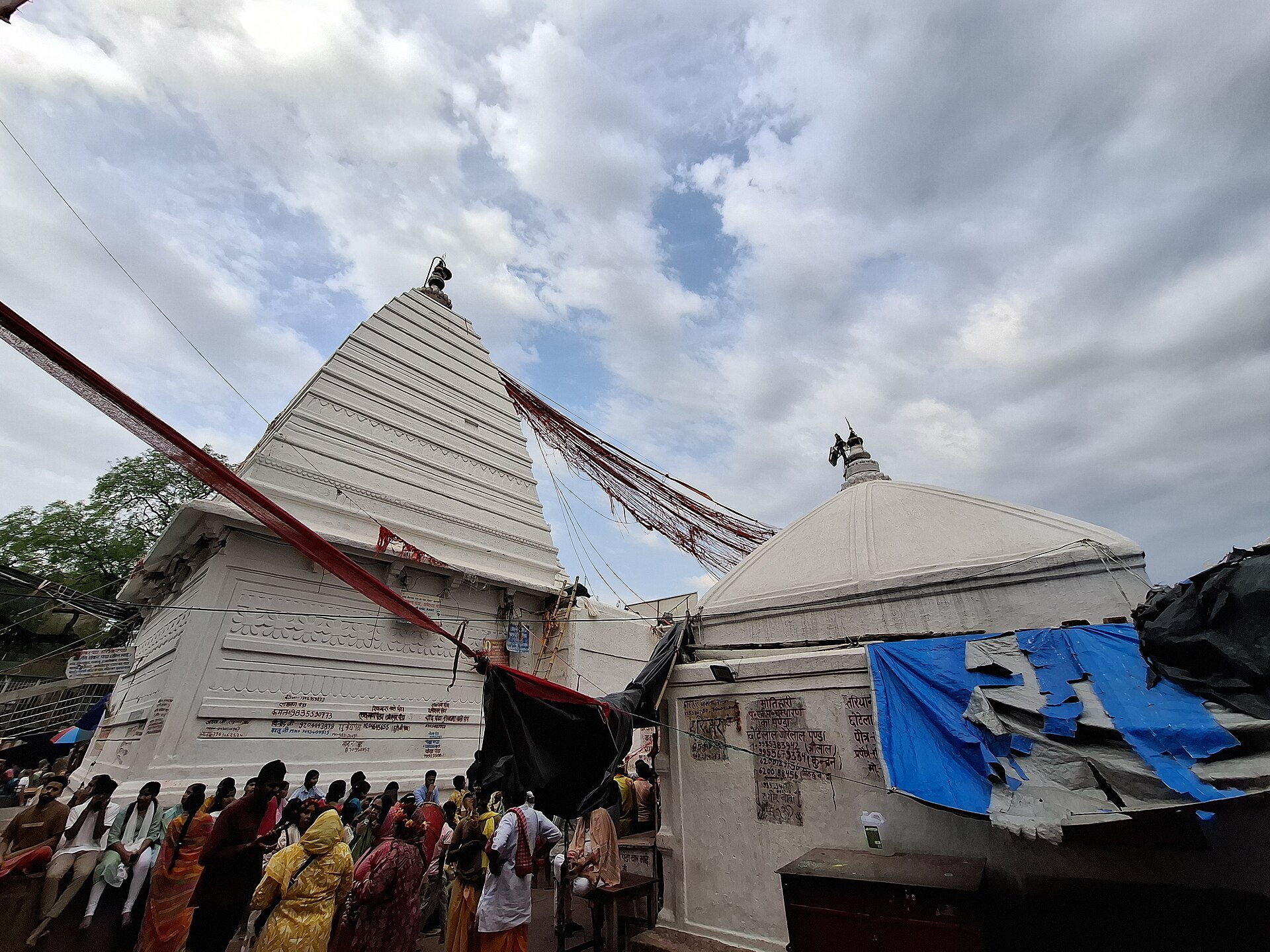
The name is the other half. Vaidyanath is Shiva as the doctor; one telling has him treating the wounds where Ravana's heads had been. Deoghar — the home of the gods — is where the lingam has stayed since, and it is called the kamna linga, the wish-granting one, which is why people tie threads here.