How it is told
Who were Daruka and Supriya?
A forest that could move
Daruka and Daruki held a stretch of the Saurashtra coast. The boon that made them difficult was Parvati's, given to Daruki: the forest itself answered to her and could be moved, so an army that marched on it could arrive to find it elsewhere. They preyed on the shipping lane.
The ship taken
Supriya was on a boat that was boarded. He and the other passengers were put in a cell on land, and he did there what he did at home — made a lingam of earth, sat in front of it and recited.
He taught the cell
He did not keep it to himself. He taught the others the five syllables, and the sound of a prison full of people saying Om Namah Shivaya is what reaches Daruka. The detail matters: Supriya's offence is not praying, it is organising.
The sword, and what came instead
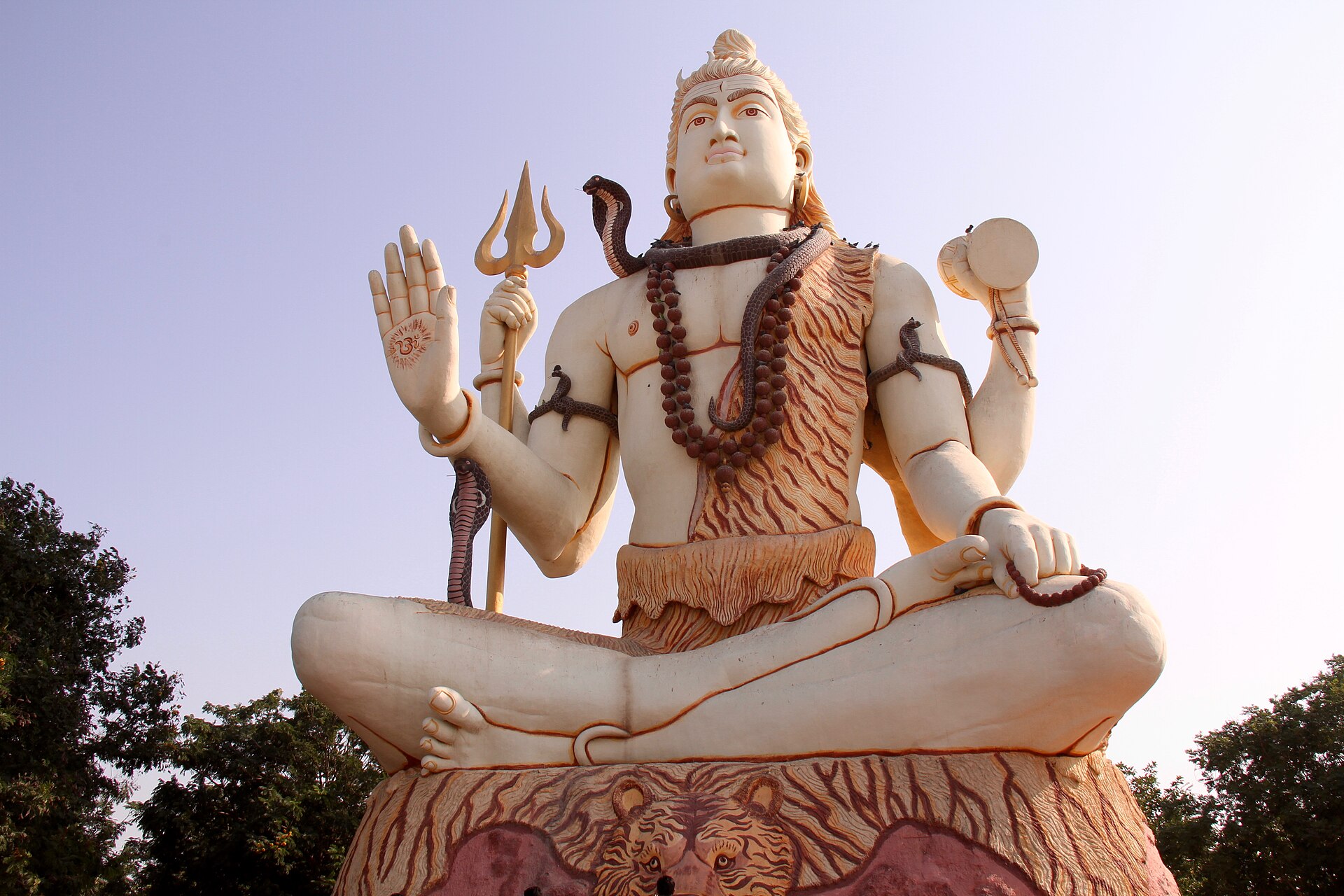
Daruka went down to kill him at the lingam. Shiva came up out of the ground where it stood, and what he was carrying was the Pashupatastra. The demon went. The prisoners walked out.
Nagesha
He stayed as Nagesha, lord of serpents, and that is what the shrine is for: people come here against poison — of snakes, and by extension of circumstance, of food, of other people. The Mahamrityunjaya is the verse said here.
The mercy at the end
Daruki is not killed. Parvati's boon is honoured, the forest is left to her, and the arrangement is simply that the lane is safe from then on. For a story that ends with the ultimate weapon being drawn, remarkably little is destroyed.