How it is told
Why is Somnath named after the moon?
Twenty-seven daughters, one condition
Daksha gave Chandra all twenty-seven of his daughters at once. They are the twenty-seven nakshatras, the lunar mansions the moon moves through in a month, and the condition attached to the marriage was the obvious one: treat them alike. Chandra agreed, and then did not. He spent his nights with Rohini and let the other twenty-six wait their turn and then wait longer.
A father who meant it
The twenty-six went back to their father. Daksha asked Chandra once, then twice, then cursed him with kshaya — wasting, consumption, the disease that takes something away a little at a time. It was a punishment chosen to fit: a husband who could not divide himself evenly would be divided down to nothing.
What a dying moon costs
The curse took hold the same night. The moon thinned, and the world thinned with him — the tides slackened, the crops would not set, the sap stopped moving in plants that wait for moonlight. This is the part of the story people forget: Chandra is not punished privately. Everything that keeps time by him begins to fail.
Six months without moving
The gods took him to Brahma, who sent him west, to Prabhas on the Saurashtra coast where the Hiranya, the Kapila and the vanished Saraswati reach the sea. There Chandra raised a lingam and worshipped it for six months without once getting up, reciting the Mahamrityunjaya — the verse addressed to the one who releases what is bound.
Turned, not lifted
Shiva came, and refused the thing Chandra had asked for. A curse that has been spoken cannot be unspoken; it can only be turned. So the sentence was halved: the moon would waste for fifteen nights and recover for fifteen, forever, and the waning would never finish him. The compromise is the calendar. Every month the moon still dies most of the way and comes back.
Soma-nath
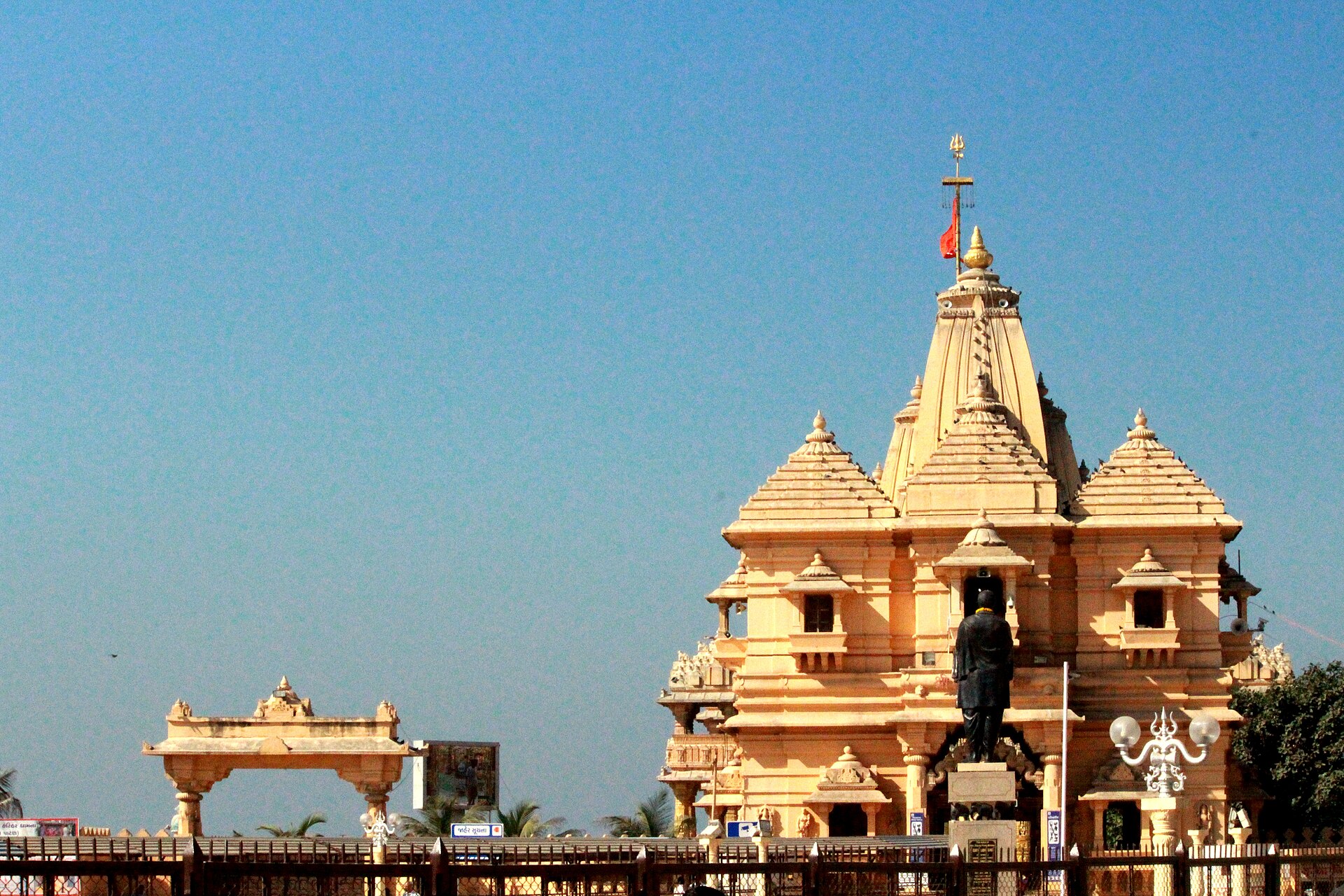
Shiva stayed on that shore as Somanatha, lord of Soma, which is the moon's other name — the shrine takes its name from the petitioner, not the deity, which is rare among the twelve. The place is Prabhas: lustre, radiance, the thing Chandra came to get back.