How it is told
Why is Omkareshwar on an island shaped like ॐ, and why are there two lingams?
The remark that started it
Narada stopped at the Vindhyas and mentioned, in passing and on purpose, that Meru was the greater mountain. The Vindhyas had not thought about it before and could not stop thinking about it afterwards.
Clay from the river
Vindhya came down to the Narmada, made a lingam out of the river clay — a parthiva lingam, the kind anyone can make and nobody needs permission for — and worshipped it for six months. Shiva came as Omkareshwar, lord of the sound Om.
The boon, and what was done with it
Vindhya asked to grow, and grew, and kept growing until the range stood in the sun's path and the south of the country went dark. This is the part of the story that is really about ambition granted without judgement.
One sentence from a passing sage
Agastya came through on his way south and asked the mountain to lie down until he came back past it. Vindhya, who respected him, bowed. Agastya went south and settled there and never came back. The range has been low ever since, and the sun has its road.
The island, and the king
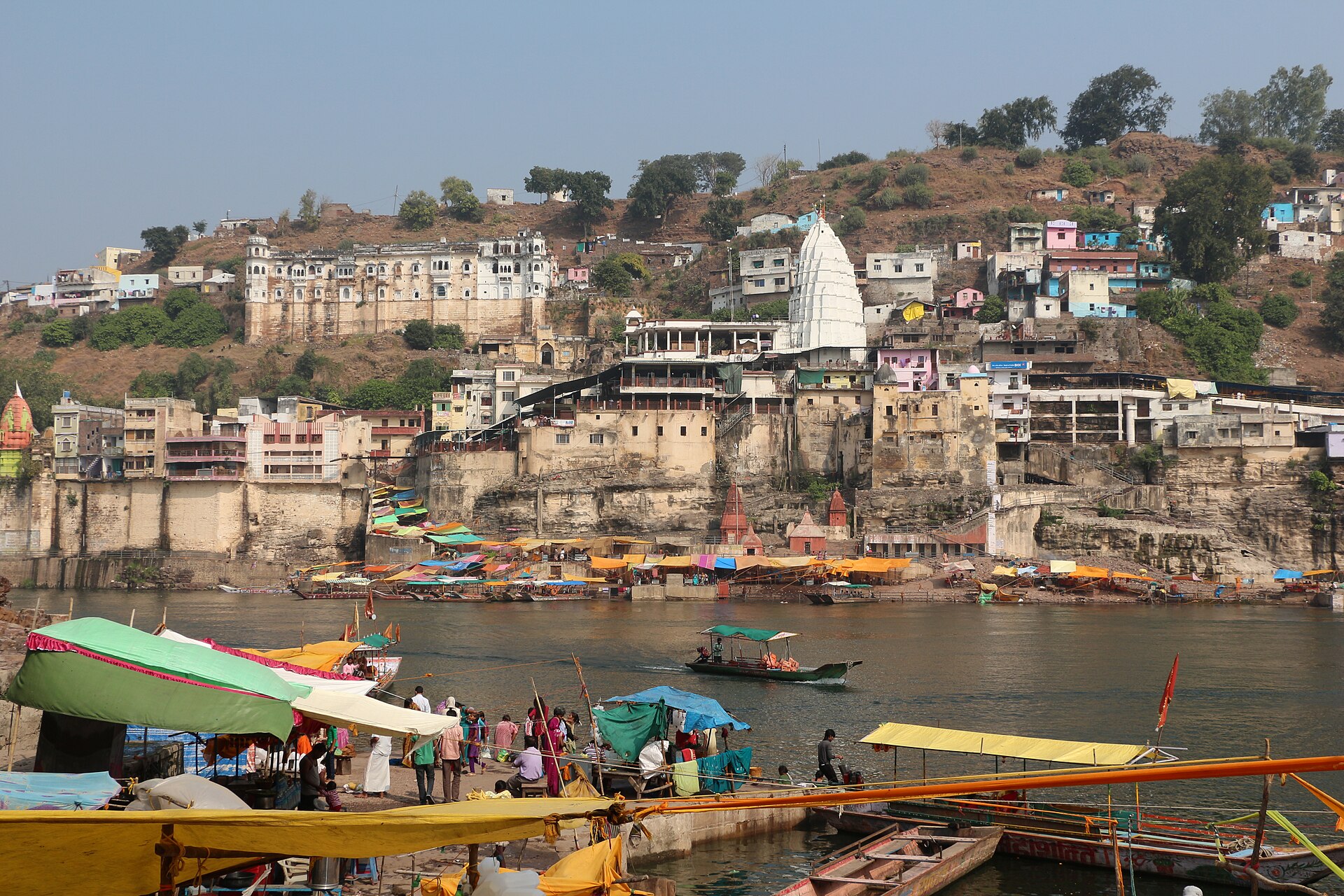
The Narmada splits around a hill here and joins again below it, and the shape the water cuts is read as ॐ from above — which is why the sound and the shrine share a name. The island carries the name of Mandhata, the Ikshvaku king who did his own penance on it.
The half on the other bank
Omkareshwar stands on the island; Mamleshwar, which is Amareshwar, stands across the water on the south bank. Many hold the jyotirlinga to be the two together rather than either alone, and the eight-kilometre parikrama of the island is walked to take in both. Nobody has ever resolved it, and both temples are old enough not to care.