How it is told
Why is the Kedarnath lingam a hump, and what are the Panch Kedar?
After they had won
Kurukshetra ended with the Pandavas holding the field and the deaths of cousins, teachers and elders on their account. Victory did not clear it. Vyasa told them that only Shiva could, and that they would have to go and ask.
He left rather than refuse them
Shiva did not want to give it. He left Kashi ahead of their arrival and went up into the Himalaya, and the town he passed through is still called Guptkashi — hidden Kashi — for the stop he made there while avoiding them. It is an unusual move for a god in these stories: not a test, not a condition, simply a refusal to be found.
A bull in a herd of cattle
Near Gaurikund he took the form of a bull and mixed himself into a grazing herd, which would have worked on most people. Bhima straddled the valley with a foot on either side and made every animal walk under him. One bull would not, and that was the end of the disguise.
Into the ground
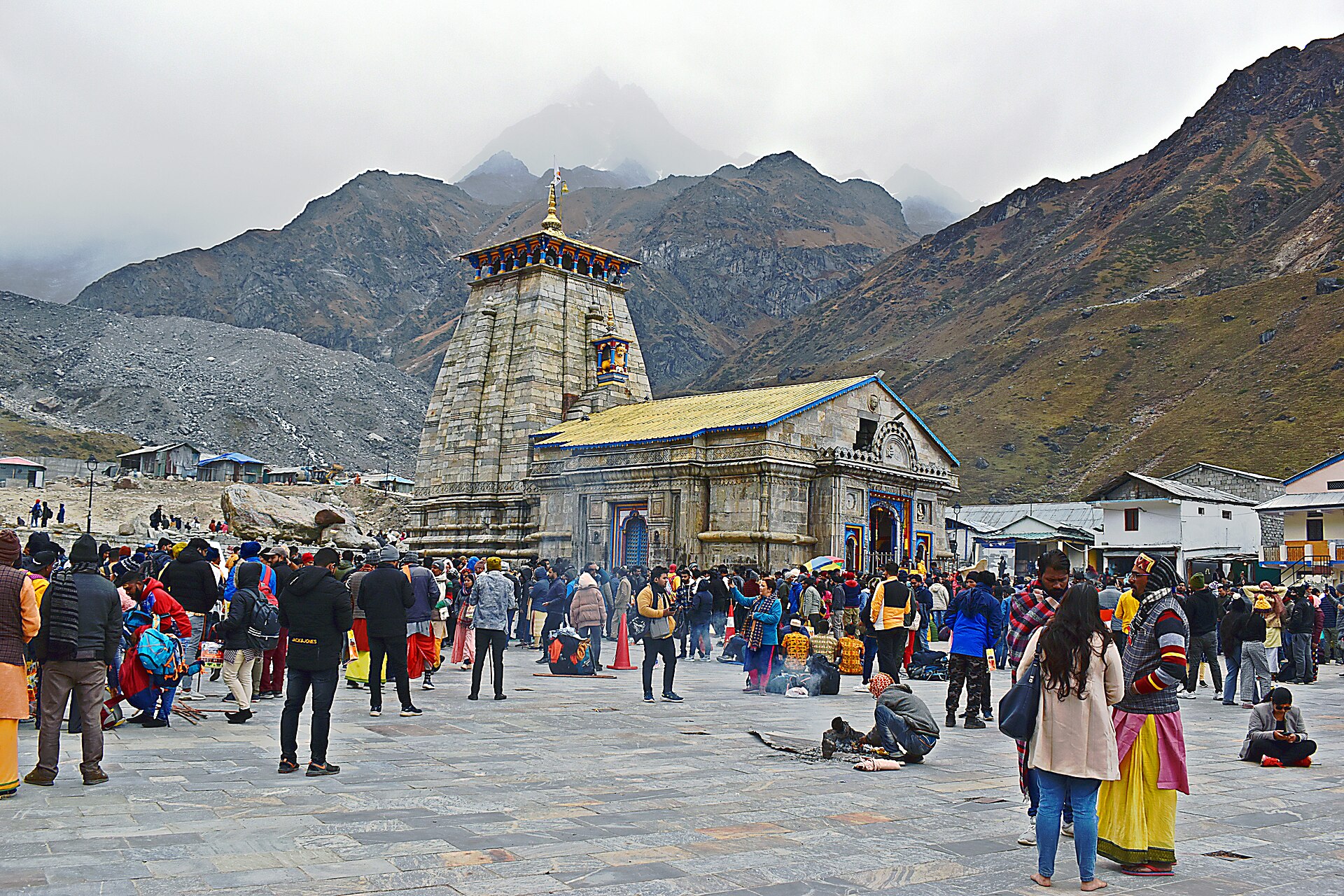
Bhima took hold of the bull by its hump as it went down into the earth, and held on. The body went through. The hump stayed, and that is the stone in the sanctum at Kedarnath — not a carved lingam but a mass of rock, which is why it does not look like the other eleven.
Where the rest of him came up
The remainder surfaced across the Garhwal hills and each place became a shrine: the arms at Tungnath, the face at Rudranath, the navel at Madhyamaheshwar, the hair at Kalpeshwar. With Kedarnath they are the Panch Kedar, and pilgrims who walk all five are completing a body.
Forgiven, in the end
He gave them the absolution he had tried to avoid. The Pandavas are said to have built the first temple here, and Adi Shankara to have restored it centuries later and taken samadhi behind it, where his memorial stands today.