How it is told
Why does Mahakaleshwar face south, and why is it bathed in ash?
A king at his worship
Chandrasena ruled Ujjain and worshipped Shiva in public every day, which in this story matters more than anything he did as king. The city watched him do it, and the city learned it from him.
The boy who copied him
Shrikar, a cowherd's son, saw the king at the shrine and went off to do the same with what he had — a stone from the road, a handful of river water, no priest, no mantra he had been taught. The adults around him tried to stop him and he carried on. The Shiva Purana spends real time on this boy. The katha is built so that the rescue is owed to him, not to the king.
Dushana
The demon Dushana held a boon that made him invisible, and he used it the way such boons are always used in these stories: he banned the rites. No fire, no recitation, no worship in Ujjain. A city that cannot be seen attacking cannot be fought, so for a while nobody did.
Up through the ground
They prayed anyway, and the earth split at the spot where they were doing it. Shiva came out of the ground as Mahakala — great time, the form that eats everything including demons with boons — and Dushana was ash before he could become visible enough to fight. Note the direction: Shiva does not descend here. He comes up, out of the floor of the city.
Facing the direction nobody faces
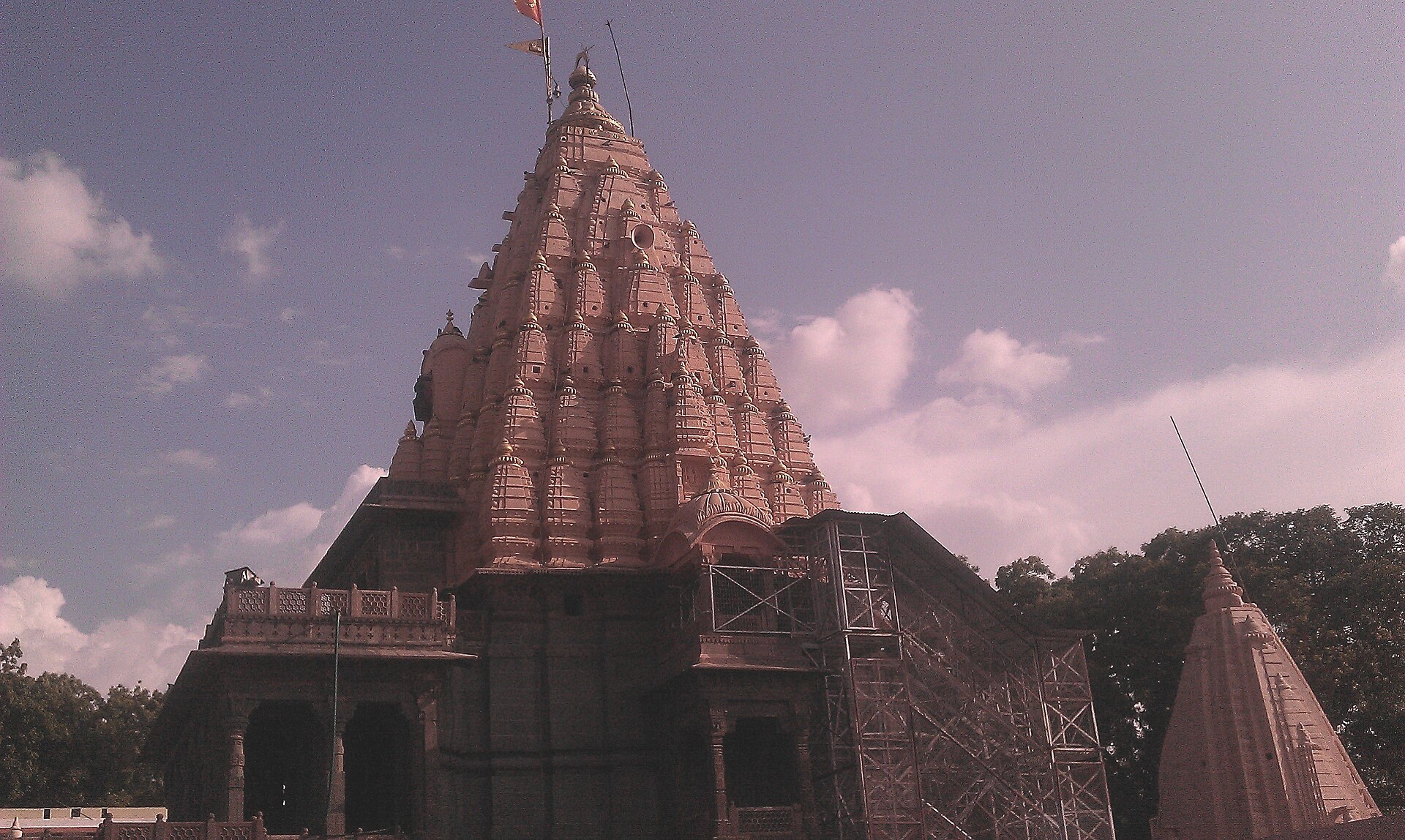
The lingam was asked to stay, and it stayed turned to the south. South is Yama's quarter, the direction of death, and it is the one orientation temple architecture avoids. Mahakaleshwar is the only one of the twelve that holds it. A shrine to time itself looks the way everyone is going.
The ash at four in the morning
The first rite of the day here is Bhasma aarti, performed before dawn, in which the lingam is bathed in ash. It is the only temple in India where ash is the morning offering rather than milk or water. Tradition says the ash came from a cremation pyre; the temple today prepares it from cow dung and says so openly.